
How Can an AEO and GEO Strategy Increase AI Visibility and Revenue?
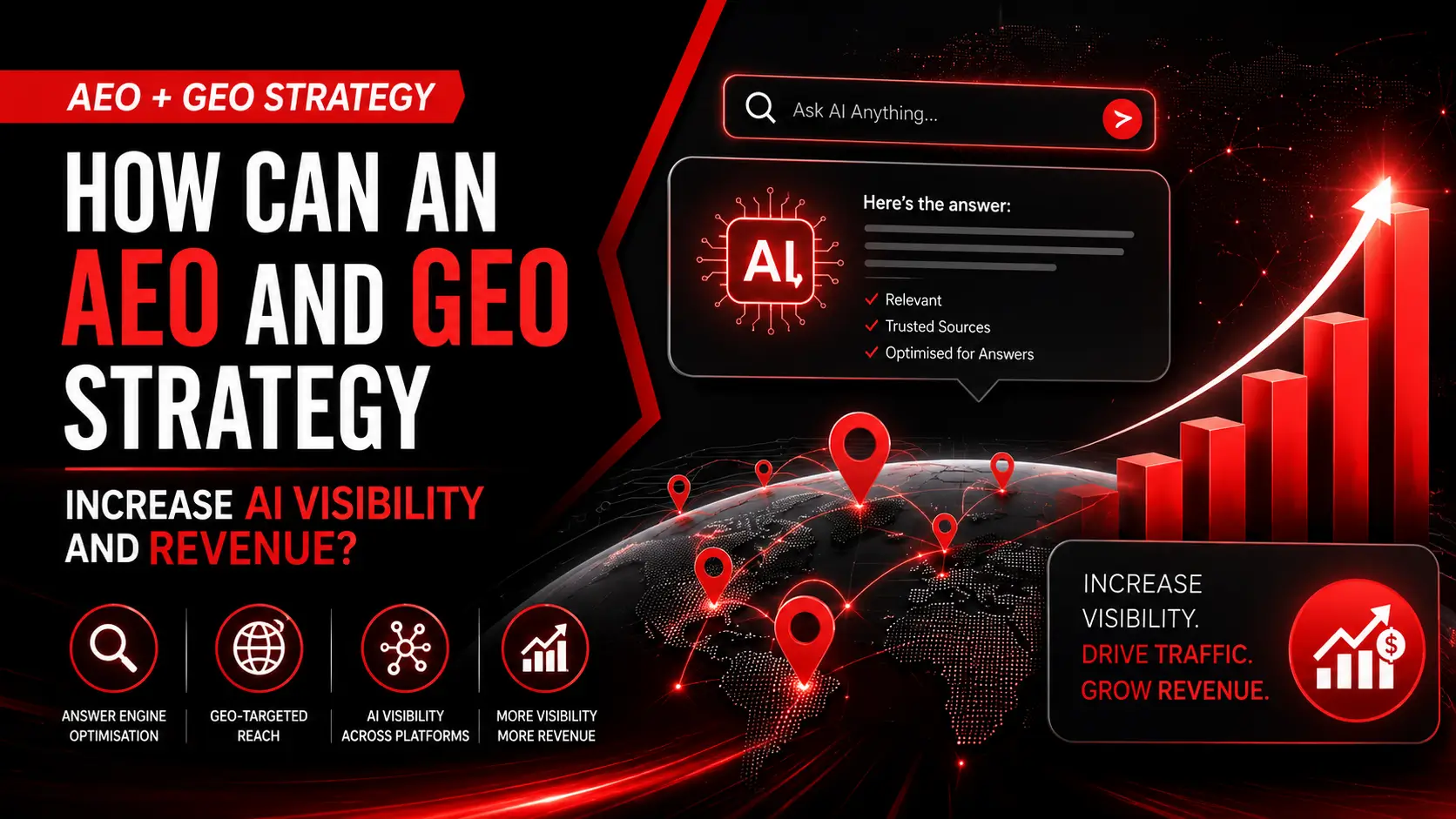
Millions of people now rely on AI tools like ChatGPT and Google AI Overviews to find answers instead of clicking through search results. Simply appearing in these responses isn't enough. The real opportunity lies in turning AI visibility into qualified leads and revenue.
A well-planned AEO and GEO strategy helps your business earn trusted AI citations, build authority, and attract high-intent customers ready to take action. This guide explains how to build an AI search strategy that supports long-term growth instead of temporary visibility.
What Is an AEO and GEO Strategy?
Answer Engine Optimisation (AEO) focuses on creating content that answers questions clearly enough for AI assistants and answer engines to reference.
Generative Engine Optimisation (GEO) expands this approach by improving how AI models understand, retrieve, and recommend your content across multiple platforms.
Together, they help businesses become reliable sources for AI-generated answers.
Instead of optimising only for traditional rankings, an AEO and GEO strategy improves:
- AI citations
- Entity recognition
- Brand authority
- Information accuracy
- Content retrieval
- User trust
- Conversion opportunities
Think of traditional SEO as helping users find your website. AEO and GEO help AI systems trust your website enough to recommend it.
Why Is AI Search Changing Digital Marketing?
Search behaviour has changed significantly over the last few years.
People increasingly expect immediate answers rather than long lists of links. AI search engines summarise information, compare products, and recommend businesses before users even visit a website.
This creates both challenges and opportunities.
Businesses that optimise only for traditional rankings may lose visibility inside AI-generated answers.
Businesses that optimise for AI search can reach users much earlier in their decision-making process.
Some major changes include:
| Traditional SEO | AI Search |
|---|---|
| Ranking webpages | Retrieving trusted answers |
| Keywords drive visibility | Entities and authority drive visibility |
| Multiple searches | One conversational search |
| Click-first journey | Answer-first journey |
| Long comparison process | Faster buying decisions |
Why Doesn't AI Visibility Always Generate Revenue?
Many businesses celebrate when they appear in AI-generated answers. Unfortunately, visibility alone does not guarantee business growth.
Several common mistakes prevent AI traffic from becoming revenue:
- Measuring mentions instead of results: Track leads, conversions, and revenue, not just AI citations.
- Publishing generic content: AI favors original, expert-led, and valuable content.
- Weak brand authority: Strong backlinks, digital PR, and credibility improve AI trust.
- Poor conversion experience: Fast, user-friendly pages with clear CTAs help convert AI visitors into customers.
What Makes an AEO and GEO Strategy Successful?
The highest-performing strategies combine several elements rather than relying on a single tactic.
Create Content That AI Can Retrieve Easily
AI models prefer information that is well organised.
Instead of writing long paragraphs without structure, organise content using:
- descriptive headings
- short paragraphs
- numbered steps
- comparison tables
- FAQs
- bullet points
- definitions
This improves readability for both people and AI systems.
Content that answers one question at a time is also more likely to appear in AI-generated summaries.
Demonstrate Real Expertise
Google and AI platforms increasingly evaluate credibility.
Businesses should demonstrate expertise by including:
- author information
- industry experience
- original research
- case studies
- statistics
- expert commentary
- updated information
These elements support Google's Experience, Expertise, Authoritativeness, and Trustworthiness (EEAT) guidelines.
Build Strong Entity Signals
AI engines identify brands using entities instead of keywords alone.
Entity optimisation includes maintaining consistent information across:
- your website
- Google Business Profile
- industry directories
- news publications
- trusted business listings
Consistent information helps AI understand exactly what your business is and what it specialises in.
Optimise for User Intent
Every page should answer one primary search intent.
For example:
- Informational: "What is Answer Engine Optimisation?"
- Commercial: "Best AEO agency"
- Transactional: "Hire AEO services"
Matching search intent improves both visibility and conversions.
Ready to Grow Your AI Search Visibility?
Turn AI mentions into measurable business growth with a results-focused GEO strategy. Build authority, improve AI visibility, and attract high-intent customers.
Get Your GEO Strategy TodayWhat Are the Four Pillars of a Profitable AEO and GEO Strategy?
Businesses that consistently earn visibility in AI search usually follow the same principles. Rather than relying on isolated SEO tactics, they build a complete strategy that helps AI models understand, trust, and recommend their content.
1. Create Retrieval-Friendly Content
AI models don't read content like humans. They scan for information that is easy to interpret and directly answers a user's question.
To improve retrieval:
- Use descriptive H2 and H3 headings.
- Answer the primary question within the first few sentences.
- Break complex topics into smaller sections.
- Add FAQs to address related questions.
- Use numbered steps and bullet lists where appropriate.
- Include comparison tables for products, services, or strategies.
This structure makes your content easier for AI systems to summarise and reference.
2. Build Topical Authority
AI search engines prioritise websites that demonstrate expertise across an entire subject, not just a single page.
Instead of publishing unrelated articles, develop a content cluster around your niche.
For example, if your focus is AEO and GEO strategy, supporting articles might include:
- What Is Answer Engine Optimisation?
- How Does Generative Engine Optimisation Work?
- AI Search vs Traditional SEO
- Google AI Overviews Explained
- How to Optimise Content for ChatGPT
- Entity SEO Best Practices
- AI Content Optimisation Checklist
When these pages are linked together, they strengthen your topical authority and help AI systems recognise your expertise.
3. Strengthen Brand Authority
AI models rely on trust signals beyond your website.
Improve your authority by:
- Publishing original research
- Earning backlinks from reputable websites
- Securing media mentions
- Maintaining consistent business information
- Encouraging customer reviews
- Showcasing author credentials
- Updating outdated content regularly
The more reliable your brand appears across the web, the more likely AI platforms are to recommend it.
4. Optimise the Conversion Journey
AI visitors often arrive with higher intent because they have already researched their options.
Your landing pages should make it easy for them to take the next step.
Focus on:
- Clear headlines
- Strong value propositions
- Fast-loading pages
- Simple navigation
- Visible trust indicators
- Customer testimonials
- Prominent calls to action
A well-optimised conversion path ensures that increased AI visibility translates into measurable business results.
Which Content Types Perform Best in AI Search?
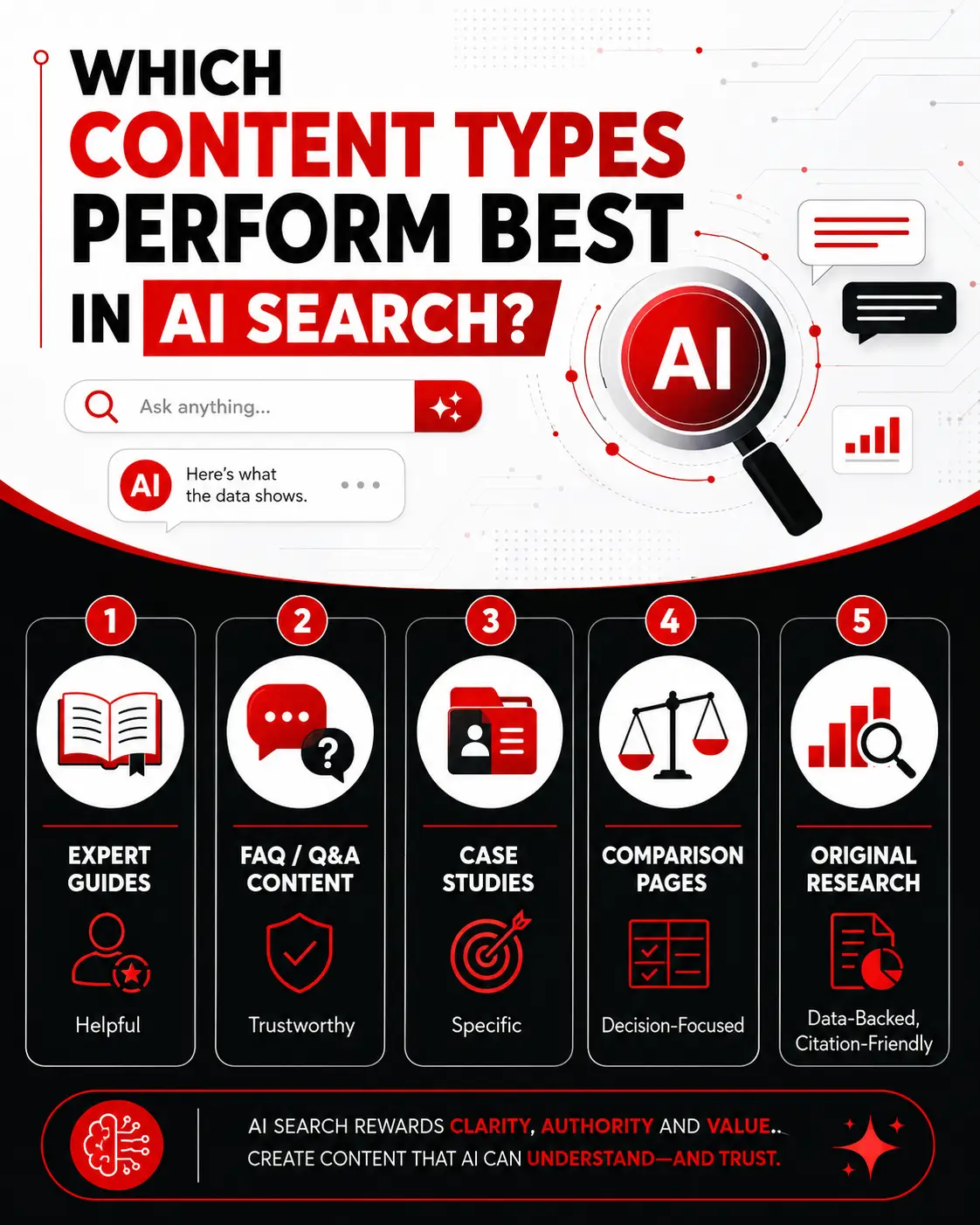
Not all content is equally valuable for AI-driven search.
The following formats are commonly favored because they answer specific questions and provide structured information.
| Content Type | Why It Performs Well |
|---|---|
| Ultimate guides | Comprehensive coverage of a topic |
| How-to articles | Step-by-step instructions |
| FAQs | Direct answers to common questions |
| Comparison pages | Easy for AI to summarise |
| Case studies | Demonstrate real-world expertise |
| Original research | Provides unique data for citations |
| Checklists | Concise, actionable information |
| Glossaries | Clear definitions of industry terms |
Publishing a mix of these formats improves your chances of being referenced by AI systems.
How Can Businesses Increase AI Visibility Beyond Their Website?
AI models evaluate information from multiple sources, not just your own site.
Building a broader online presence strengthens your credibility.
Consider these channels:
- Digital PR: Media coverage and expert commentary increase brand recognition and authority.
- LinkedIn: Publishing professional insights helps establish expertise and reach industry audiences.
- YouTube: Videos often appear in search results and provide additional signals of topical authority.
- Online Communities: Participating in relevant discussions allows you to share knowledge and build trust.
- Business Directories: Ensure your company details remain accurate and consistent across reputable directories.
A diversified digital presence makes it easier for AI platforms to verify your business.
Which Metrics Should You Track?
Traditional SEO metrics don't always reflect the value of AI search.
Instead of focusing only on rankings, monitor metrics that align with business goals.
Visibility Metrics
- AI citations
- Share of voice
- Brand mentions
- Featured snippets
- Google AI Overview appearances
Engagement Metrics
- Time on page
- Returning visitors
- Scroll depth
- User engagement
- Assisted conversions
Revenue Metrics
- Qualified leads
- Conversion rate
- Sales enquiries
- Customer acquisition cost
- Revenue from organic traffic
- Customer lifetime value
Tracking these metrics provides a clearer picture of how AI visibility contributes to business growth.
How Can You Build an AEO and GEO Strategy in 90 Days?
A phased approach helps businesses implement improvements without disrupting existing marketing efforts.
Days 1–30: Assess and Strengthen the Foundation
Start by reviewing your current visibility in AI-powered search.
Evaluate:
- Existing content
- Brand authority
- Internal linking
- Structured data
- Page speed
- Technical SEO
- Content gaps
Prioritise updates to pages that already attract organic traffic.
Days 31–60: Publish High-Value Content
Create content designed for both users and AI systems.
Focus on:
- Comprehensive guides
- Frequently asked questions
- Industry comparisons
- Original research
- Case studies
- Expert interviews
Promote new content through social media, newsletters, and digital PR.
Days 61–90: Improve Conversion and Measure Results
Once your content gains visibility, optimise the user journey.
Review:
- Landing page performance
- CTA placement
- Trust signals
- Form completion rates
- Lead quality
- AI referral traffic
Use the insights to refine your strategy and improve future content.
Ready to Grow with GEO?
Contact us to build a GEO strategy that increases AI visibility and drives qualified leads.
Contact UsConclusion
AI-powered search is reshaping how people discover brands, compare solutions, and make purchasing decisions. Success no longer depends solely on traditional search rankings. Businesses also need to earn the trust of AI systems that summarise information and recommend reliable sources.
A well-planned AEO and GEO strategy combines structured content, topical authority, strong brand signals, and user-focused conversion paths. These elements work together to increase visibility, improve engagement, and support sustainable revenue growth.
Companies that invest in AI search optimisation today are better positioned to build long-term authority and remain competitive as search continues to evolve.
Frequently Asked Questions
What is an AEO and GEO strategy?
An AEO and GEO strategy helps businesses optimise content for AI search engines by improving retrieval, authority, and user experience.
How is AEO different from traditional SEO?
Traditional SEO focuses on rankings, while AEO prioritises providing direct answers that AI systems can understand and reference.
Why is GEO important?
Generative Engine Optimisation helps AI models accurately retrieve and recommend your content across multiple AI-powered platforms.
Can small businesses benefit from AEO and GEO?
Yes. Businesses that publish expert content and build strong authority can compete effectively regardless of their size.
How long does it take to see results?
Most businesses notice improvements within three to six months, depending on content quality, competition, and authority.
Spotlight GB
Editorial Team


