
Why Your Google Ads Cost in 2026 Is Increasing and What It Means for Your Budget
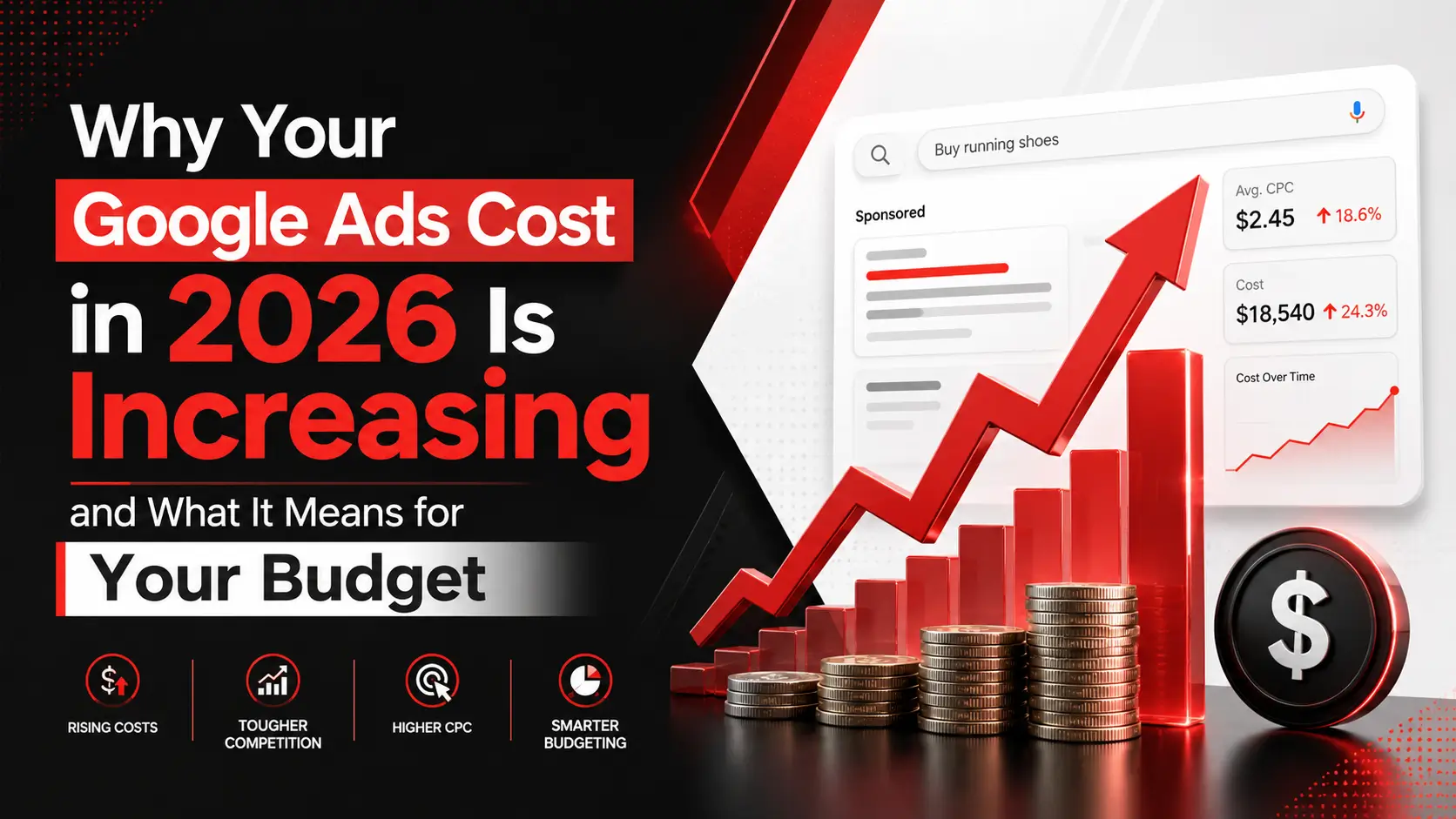
The rise in Google Ads cost in 2026 has become one of the most discussed topics among marketers and business owners. Many advertisers are noticing that the same campaigns they ran a year or two ago now require higher budgets to generate similar results.
This shift is not random. It reflects bigger changes in competition, automation, user behavior, and how Google’s advertising ecosystem operates today. According to Google’s advertising insights, search ads continue to deliver strong returns for businesses, but competition for attention has increased significantly across most industries.
At the same time, Statista reports continued growth in global digital ad spending, which naturally increases auction pressure and drives up click costs.
Why Are Advertising Costs Rising In 2026
The biggest reason behind the increase in Google Ads costs in 2026 is simple: more advertisers are competing for the same search space. Over the last few years, nearly every business has shifted toward digital-first marketing, and paid search is often the first channel they invest in.
At the same time, Google’s auction system is becoming more advanced. It no longer relies only on manual bids. Instead, it uses machine learning to adjust bids in real time based on user behavior, intent signals, and conversion probability. This makes auctions more competitive and dynamic than ever before.
A key factor many advertisers overlook is that AI systems now optimise for outcomes, not just clicks. This means Google is often willing to increase bids automatically when a user appears more likely to convert, which raises average CPCs across campaigns.
AI is Changing How Ads Are Priced
Artificial intelligence is one of the biggest reasons google ads expensive has become a common concern. Google’s Smart Bidding, Performance Max campaigns, and automated targeting systems all use AI to decide how much an advertiser should pay for a click.
The challenge is that when every advertiser is using similar AI systems, competition intensifies at the same moment. Instead of humans setting conservative bids, machines are constantly adjusting upward in high-intent auctions.
Research from HubSpot shows that a majority of marketers are now using AI tools in their workflows, which means automation is no longer a competitive advantage; it is the standard. This widespread adoption contributes directly to rising CPC pressure.
Industries facing the highest cost increases
Not all industries are affected equally. Some markets naturally have higher customer value, which drives aggressive bidding.
The most competitive sectors include:
- Legal services
- Insurance
- Real estate
- Healthcare
- E-commerce
- SaaS products
- Home services
For example, a single legal client can be worth thousands of dollars, so advertisers are willing to pay much more per click. As more companies enter these spaces, auctions become more expensive and less predictable.
This is a major reason why PPC costs are especially visible in high-value service industries.
What Actually Affects CPC In Google Ads
Many advertisers ask what really influences pricing. The answer is a combination of multiple factors working together.
- Keyword competition: High-intent keywords attract more advertisers, which increases auction prices.
- Quality Score: Google evaluates landing page experience, ad relevance, and expected click-through rate. Poor quality scores often lead to higher costs.
- Targeting precision: Broad targeting wastes budget and reduces efficiency, while precise targeting improves conversion rates.
- User intent signals: Google prioritises users who are more likely to convert, increasing bids for high-value traffic.
- Automation systems: Smart bidding adjusts prices dynamically, often increasing CPC during competitive auctions.
Understanding what affects google ads cpc is essential for controlling costs effectively.
Rising Competition And Reduced Organic Visibility
Another major shift impacting Google Ads cost in 2026 is the changing search experience. Google has introduced AI-generated summaries and more interactive search features. This reduces visibility for traditional organic listings in some cases, pushing businesses to rely more heavily on paid ads.
As organic traffic becomes less predictable, businesses increase their paid budgets to maintain consistent visibility. This added demand directly impacts auction pricing.
How To Manage Increasing Ad Costs Effectively
Rising costs do not mean Google Ads is becoming less effective. It means campaigns need better structure and optimisation.
One of the most effective ways to improve performance is by focusing on keyword intent. Instead of targeting broad terms, advertisers should prioritise long-tail, high-intent searches that reflect clear purchase behavior.
This is where a strong approach to reducing Google Ads costs becomes important. Small improvements in targeting and relevance often lead to significant cost reductions over time.
Practical Strategies To Reduce CPC
Here are practical methods to improve efficiency:
- Use negative keywords to filter irrelevant traffic
- Focus on long-tail keywords with purchase intent
- Improve landing page speed and relevance
- Separate branded and non-branded campaigns
- Review search terms regularly
- Optimise ad copy for higher click-through rates
- Adjust bids based on device and location performance
Even small refinements can significantly improve efficiency and help build a stronger lower CPC Google Ads strategy.
Improve Your Google Ads Performance
If your campaigns are spending more but delivering less, it may be time to refine your strategy and reduce wasted ad spend with smarter optimisation.
Optimise My Google Ads Strategy
Why Landing Pages Matter More Than Ever
A strong landing page can directly reduce advertising costs. Google rewards ads that lead to useful, relevant, and fast-loading pages. If users quickly leave your site, CPC often increases because the system assumes poor relevance.
Improving landing pages helps increase Quality Score, which lowers cost per click and improves ad placement.
Automation Tools: Helpful But Not Perfect
Campaign automation, especially Performance Max, is widely used today. While it simplifies campaign management, it also reduces visibility into where your budget is going.
This can sometimes lead to higher spending in areas that are not fully optimised. Businesses that regularly audit automated campaigns tend to perform better than those that rely entirely on automation without review.
Final Thoughts
The increase in Google Ads cost in 2026 is not caused by a single factor. It is the result of rising competition, advanced AI bidding systems, shifting user behavior, and reduced organic visibility.
However, higher costs do not mean lower returns. Businesses that focus on better targeting, stronger landing pages, and continuous optimisation can still achieve strong results.
The key is not spending more, but spending smarter.
Spotlight GB
Editorial Team


